You can write the perfect cold email. If it lands in spam, nobody will ever read it. In 2026, Google and Microsoft are stricter than ever about sender reputation. Companies that skip the technical foundation waste months of outreach effort before realizing their emails were never seen.
Here is exactly what you need to set up before sending a single campaign email, explained without the jargon.
Never use your main domain
This is the most important rule and the one most companies break. If you send cold emails from yourcompany.com and your domain gets flagged, your entire company email including client communication, invoices, and support gets affected.
Instead, purchase look-alike domains. If your company is acmecorp.com, register something like acmecorp-growth.com or getacmecorp.com. Set up separate Google Workspace inboxes on these domains. Your cold outreach runs through these, and your primary domain stays completely protected.
Set up authentication protocols
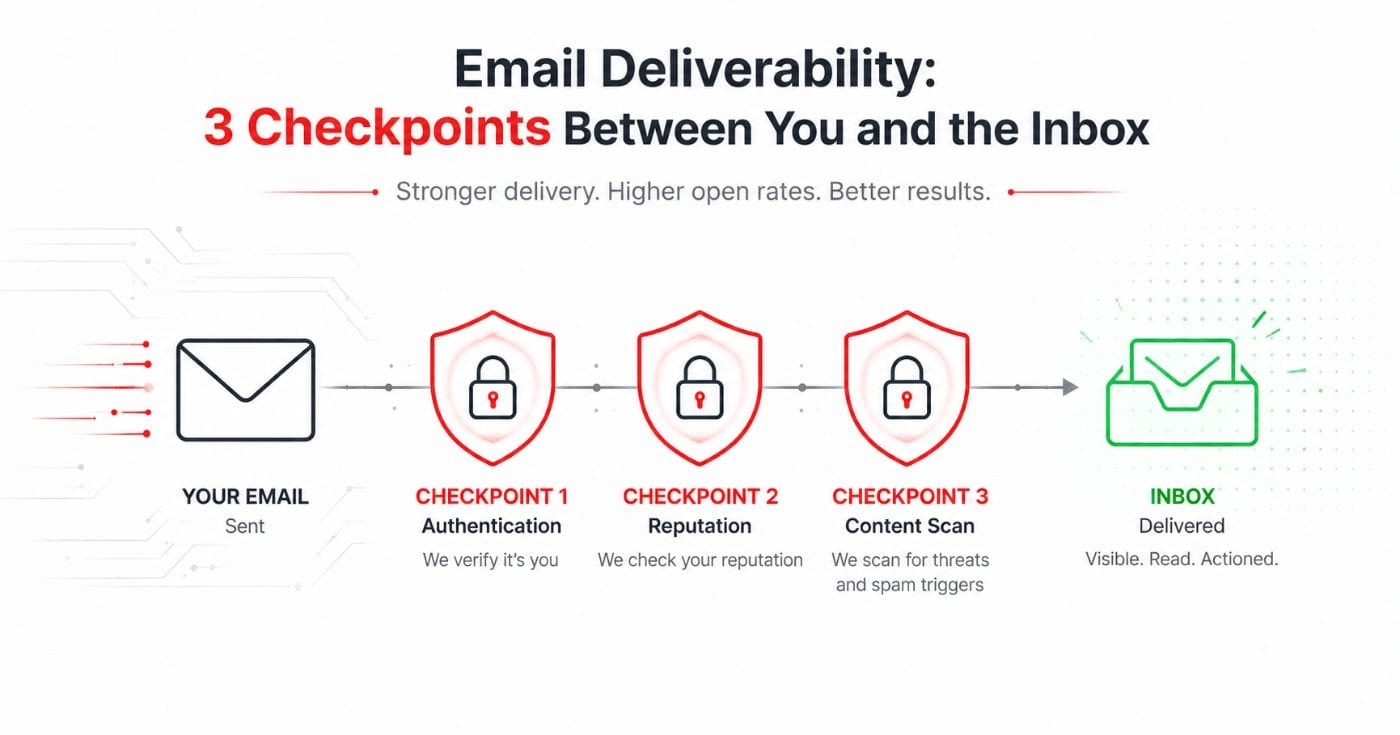
Three protocols tell email providers that your emails are legitimate.
SPF (Sender Policy Framework) tells receiving servers which servers are authorized to send email from your domain. Without it, anyone could send emails pretending to be you, so email providers treat unauthenticated senders as suspicious by default. DKIM (DomainKeys Identified Mail) attaches a digital signature to every email you send. The receiving server checks this signature against a public key published in your domain's DNS records. If the signature matches, the email has not been tampered with in transit. DMARC (Domain-based Message Authentication, Reporting, and Conformance) ties SPF and DKIM together and tells receiving servers what to do if authentication fails: report it, quarantine it, or reject it entirely. All three must be configured correctly before warmup begins. This is not optional in 2026. A brand-new email address sending 50 cold emails on day one will get flagged immediately. Email providers track sending patterns, and a sudden spike from an unknown sender is the clearest spam signal there is. We use AI-powered warmup tools that gradually increase sending volume over 14 days. These tools send and receive realistic emails between a network of inboxes, building a positive sending history. By day 14, the inbox has established enough trust with ISPs to begin campaign volume without triggering spam filters. Even with perfect infrastructure, a high bounce rate will destroy your domain reputation. If more than 5% of your emails bounce, email providers assume you are sending to purchased or scraped lists. We run every prospect list through zero-bounce verification tools before any campaign launches. Invalid addresses, catch-all domains, and risky contacts get flagged and removed. The result is bounce rates consistently below 2% and open rates that confirm primary inbox placement.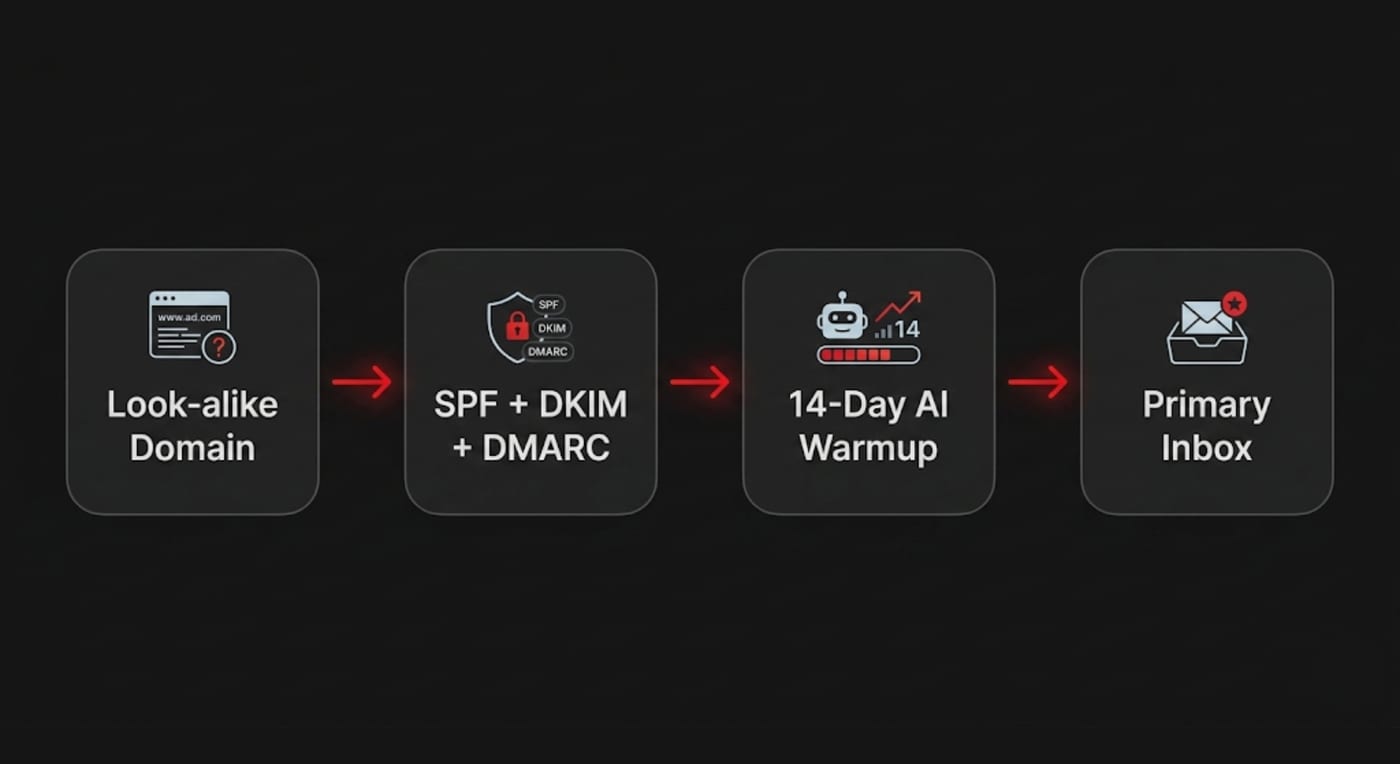
Warm up for 14 days minimumValidate every email address before sending